
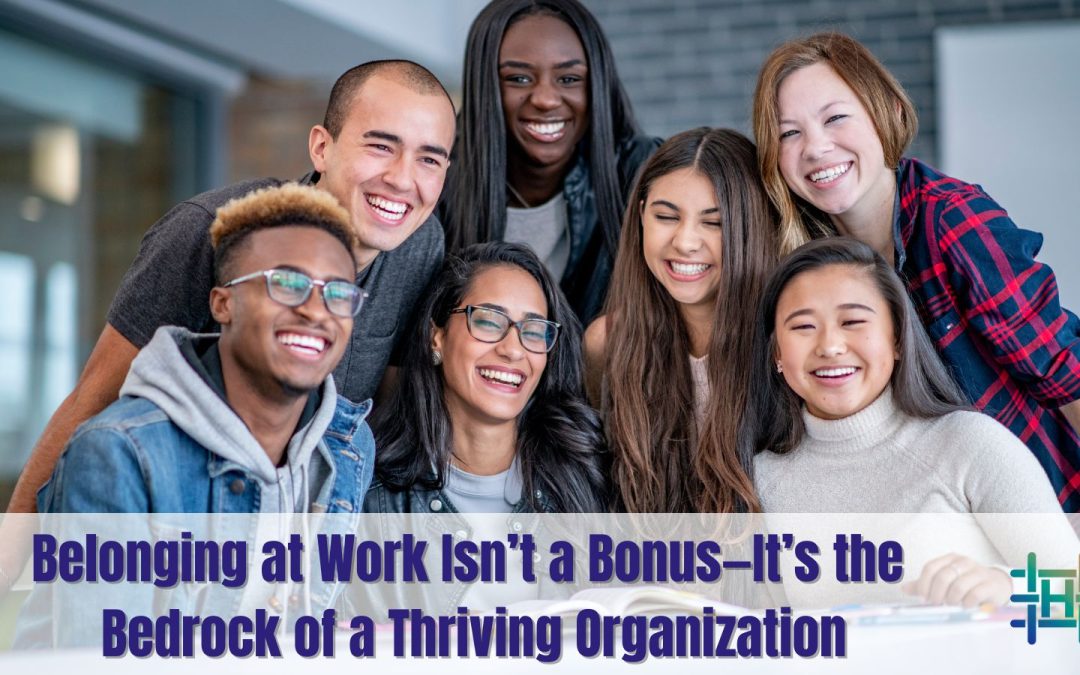
When employees feel like they belong, they don’t just stay longer. They contribute more, collaborate better, and carry your mission forward. Here’s what leaders need to know about belonging.
What Does Belonging at Work Really Mean?
Belonging is more than just a buzzword. It’s not about hosting a monthly birthday lunch or slapping a DEI statement on your website. It’s about creating a workplace where people feel like they are in the right place, with the right people, doing work that matters—and that they matter, too.
Belonging means:
- Being seen: People feel acknowledged for who they are.
- Being valued: Their contributions are noticed and appreciated.
- Being safe: They trust that it’s okay to speak up, disagree, and try new things without fear of punishment or retribution.
If your team members don’t feel like they belong, they’re less likely to bring their ideas, their feedback, or their full selves to the work. And that has real consequences.
Why Belonging Matters for Performance and Culture
A workplace culture that fosters belonging isn’t just a nice-to-have. It’s a critical performance strategy.
Research published in Harvard Business Review found that employees who feel a strong sense of belonging are 3.5 times more likely to contribute to their fullest potential at work. That kind of return doesn’t come from bonuses or ping-pong tables. It comes from creating conditions where people feel connected, valued, and safe.
Organizations that prioritize belonging experience:
- Higher retention: People are more likely to stay when they feel like they’re part of something meaningful.
- Better collaboration: Teams work better when people feel comfortable contributing and challenging ideas.
- Faster, more aligned decisions: Psychological safety allows for open discussion and faster trust-based choices.
- Increased innovation: People are more willing to share bold ideas when they don’t fear rejection or judgment.
Especially in purpose-driven organizations, where missions are big and resources may be stretched, belonging is fuel.
A Story from the Field: Belonging Before It Had a Name
Years ago, I was a consultant on a massive, multi-year government system modernization project. I was tasked with leading the communication and rollout strategy for 179 federal agencies.
What was unusual: I was a consultant, but I was asked to serve as the lead of a diverse team that included staff from my government client, the prime contractor, the subcontractor, and other independent consultants. And somehow—despite the complexity and the change we were managing—we clicked.
- We worked to our strengths.
- Senior folks mentored junior team members.
- We helped each other through tough moments and shared wins.
- We built real trust and respect.
No one called it “belonging” back then. But that’s exactly what it was. We felt seen, supported, and committed to the same goal. And it showed. Our team earned the respect of senior management and the agencies we served.
When I work with client organizations now, I see the same dynamic repeated again and again: the strongest teams are those that intentionally build a sense of belonging.
Belonging Is Even More Crucial in Times of Change
Belonging becomes even more important when your team is in flux. Maybe you’ve had turnover, a change in leadership, or a realignment of roles. Maybe you’re facing uncertainty due to external shifts—funding cuts, policy changes, or new strategic directions.
In times like these, people need to know:
- They’re not alone
- They’re still part of something bigger
- Their voice and work still matter
- THEY still matter
This is where many organizations slip up. In the rush to stabilize the work, they forget to stabilize the people.
If you want your team to stay resilient and focused through change, start by investing in the relationships that make belonging possible.
Common Pitfalls That Undermine Belonging (Even with Good Intentions)
Even well-meaning leaders can unintentionally make people feel excluded. Here are a few traps to watch for:
- Jargon and insider language: For new or junior staff, this can feel like there’s a secret code they’ll never learn.
- Over-reliance on “culture fit”: If everyone has to fit into the same mold, you lose diversity of thought and experience.
- Exclusion from decision-making: When people feel left out of the loop, they assume they don’t belong in it.
- Unexamined rituals: Traditions can be great—but not if they unintentionally exclude certain people or groups.
- Assuming everyone is “fine”: Belonging isn’t just about crisis prevention. It’s about proactive care.
How to Build Belonging in Teams (Even When People Change)
So, how do you create a culture where belonging sticks—even when your team composition doesn’t?
Here are seven practical strategies you can use right away:
1. Make Time for Personal (Not Private) Sharing
Let people share their interests, backgrounds, and quirks in a safe, low-pressure way. A quick check-in question at the start of a meeting can go a long way.
2. Cut the Jargon
Speak clearly. If there’s an acronym or process term, explain it. Better yet, ask your team to create a shared glossary so everyone stays informed.
3. Expand Your Rituals
Take a look at your current rituals. Who do they include? Who might be left out? Can you adjust them to make space for more voices, and more ways of engaging?
4. Acknowledge Newbies (and Longtimers)
Publicly welcome new team members—and keep showing appreciation for your veteran staff. Belonging is cumulative.
5. Create Moments to See Each Other
Especially in hybrid or remote environments, don’t jump straight to task mode. Use video when possible. Encourage connection before diving into the work.
6. Celebrate Differences
Diverse perspectives fuel better outcomes. Highlight unique strengths and experiences. Invite people to share what they’re proud of.
7. Find Common Ground
Help your team discover shared interests, passions, or life experiences. This builds bridges and builds trust.
Questions to Start Building Belonging Today
Want to spark meaningful conversations and uncover how your team really feels? Start with a few of these:
- When do you feel most at home here?
- What part of your identity would you like us to acknowledge more?
- What helps you feel connected to the team?
- When do you feel left out, and what might help?
- How do we show people they matter here?
These aren’t always easy questions—but they are powerful.
Belonging Isn’t a Perk. It’s the Path to Purpose.
In purpose-driven organizations, people don’t show up just for the paycheck. They show up because they believe in the mission. They want their work to matter.
But when people don’t feel like they belong, they pull back. They second-guess themselves. They stop bringing ideas. They stop trusting.
Belonging is what allows your people to give their best.
It allows them to:
- Speak up with confidence
- Offer better solutions
- Stay through challenges
- Collaborate more generously
As a leader, you don’t have to build a sense of belonging alone. However, you do shape the environment in which it grows.
So here’s your invitation: Ask yourself not just how well your team is performing, but how deeply they feel connected. How well do they know and trust each other? How safe do they feel speaking up?
Because when people feel like they truly belong, everything changes.
Are you looking to understand whether people feel like they truly belong in your organization? Let me know – I have some ideas for you.
P.S. Want more insights like this?
I share practical strategies for strengthening workplace culture, building leadership alignment, and turning good intentions into actual practice.
Subscribe to my Culture Threads newsletter for research-backed insights and actionable approaches delivered to your inbox.
