
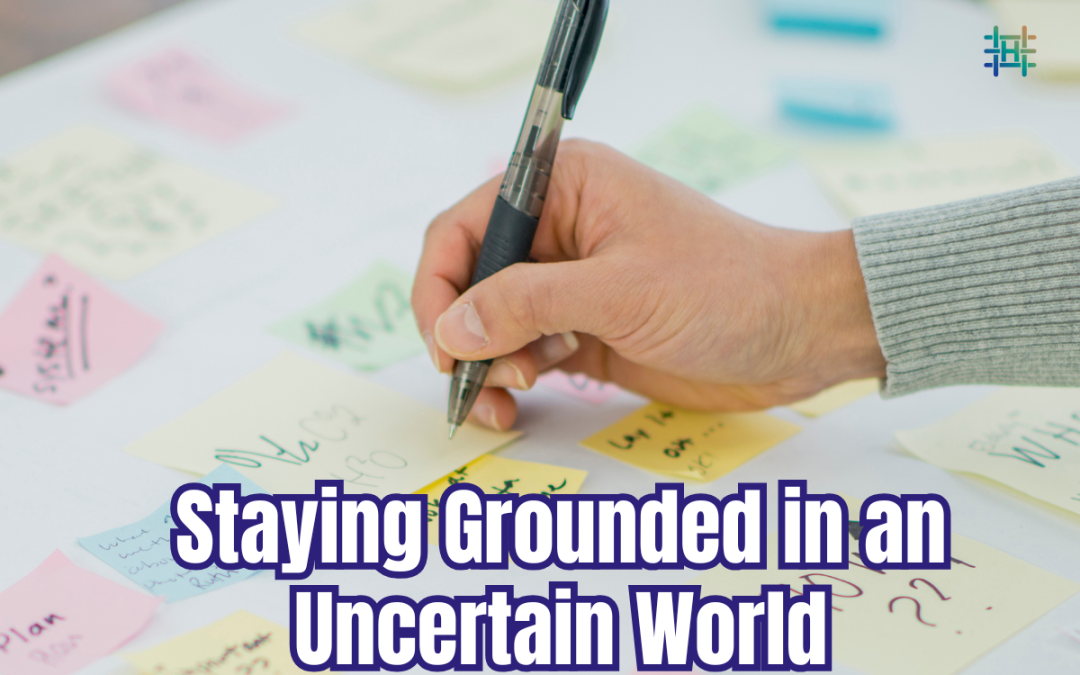
On November 20, 2024, I grabbed a Post-it note and wrote down a list of things I could personally control. Things that helped me feel grounded.
After the election—well, if you know me, you know.
I needed something tangible to remind myself that, even when the world feels chaotic, I still have agency.
Here’s what I wrote:
Things I Can Control:
- What time I get up in the morning
- How often I exercise
- What I eat
- My attitude
- How often and how far I walk
- What I read or watch on TV
- My actions & behaviors
- Who I choose for my friends
- The choices I make for my business
- How often I exercise (yes, I needed to see this one twice!)
Lately, I’ve been coming back to this list a lot.
Understanding the Circles: Concern, Influence, and Control
I’m not the only one who thinks about this. Stephen Covey, in The 7 Habits of Highly Effective People, introduced a simple but powerful way to help people focus their energy where it truly matters. His concept—often referred to as the Circle of Concern, Influence, and Control—has been widely used by leaders, teams, and individuals looking to stay grounded in uncertain times.
To help illustrate this idea, here’s a simple visual representation of these circles:

Circles of Concern, Influence & Control
1. The Circle of Concern (Outer Circle) – Everything That Affects You
This is the largest circle and includes everything that impacts your life but that you have no direct control over. Some examples:
- The economy and job market
- Government policies and election outcomes
- Natural disasters or global crises
- What other people say, do, or think
- The latest news headlines
- The traffic on your morning commute
It’s easy to get stuck here, worrying about things we can’t change. But the more we dwell on these concerns, the less energy we have for things within our influence.
2. The Circle of Influence (Middle Circle) – What You Can Impact
Inside the Circle of Concern is the Circle of Influence, which includes things we may not control directly, but we can take action to affect.
Some examples of what’s in this circle for me:
- Reaching out to a friend or colleague—offering support, or just listening
- Helping my active clients and former clients navigate uncertainty
- Learning skills that help me stay grounded and have meaningful conversations, especially when it’s hard
- Finding new ways to support organizations I believe in and people going through difficult times
- Helping teams feel safe to share ideas and concerns
- Speaking up for what matters—using my own voice to advocate for change
- Volunteer for causes I believe in
- Connecting and learning from people who have different backgrounds and viewpoints
- Writing on topics that align with my values
- Helping leaders see that purpose and impact aren’t just nice-to-haves—they are just as important as profits and efficiency
Covey emphasizes that truly effective people focus their energy here. The more we invest in what we can influence, the more we expand our ability to create meaningful change.
3. The Circle of Control (Innermost Circle) – What You Directly Control
At the very center of it all is the smallest but most powerful circle: the Circle of Control. This includes everything I have direct power over, like:
- My thoughts, choices, and actions
- What I say and do
- How I respond to situations
- My habits, routines, and mindset
- Where I decide to focus my energy
These are the things I have direct control over — the things I can choose to do in order to have the influence I want to have in the middle (influence) circle.
When life feels overwhelming, anchoring yourself in what you can control is how you can regain stability. That’s why I wrote my Post-it note—to remind myself that no matter what’s happening in the world, I always have control over some things.
What I Can Do to Stay Grounded
While we can’t control everything, we do have control over our own thoughts, choices, and actions. That’s why, when life feels overwhelming, I focus on what I can do for myself in the moment:
- Take a 10-minute walk
- Make a calming cup of tea
- Put away my work and read a mystery novel for 20 minutes
- Take a nap
- Call my congressperson
- Go to the gym
- Stop doomscrolling on social media
- Meditate
- Turn off the internet
- Put away my phone
- Take another walk
- Practice any kind of self-care that helps me get through the day
And then I breathe. In…. Out…. In…. Out….
Because while I can’t control the news or the decisions being made in boardrooms or government offices, I can always control how I show up in my own life.
What About You?
What do you do to feel grounded when the world feels overwhelming? I’d love to hear—drop a comment or send me a message.
P.S. Want more insights like this?
I share practical strategies for strengthening workplace culture, building leadership alignment, and turning good intentions into actual practice.
Subscribe to my Culture Threads newsletter for research-backed insights and actionable approaches delivered to your inbox.

Linda, this was such a timely and powerful blog. Thank you!
Thank you Marlo! Glad you found this useful and thanks for incorporating it into your recent LinkedIn post!
Glad you were inspired to share Circles of Concern, Influence and Control — an easy way to refocus and reground!
I keep surprising myself at how often I’m pulling it out to help me stay grounded these days.